12 June 2017
No, it doesn't make sense to treat islamophobia as racism

The
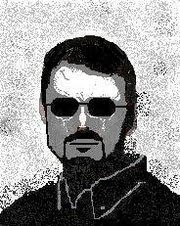
man in this photo is Wagih Subhi Baqi Sulayman, more properly known as His
Holiness Tawadros II, 118th Pope of Alexandria (the 98th since Athanasius),
leader of the Coptic Orthodox Church. I’m thinking about Pope Tawadros (Arabic
for "Theodore") today because, a months old, Vox article appeared
again on my Twitter feed today, which seeks to explain how it makes since to treat
islamophobia as racism.
The
TLDR: Even though Islam is a religion, it makes sense to treat “islamophobia”
as racism because prior to 911 what we now know as “islamophobia” was
previously known as “orientalism” – “the
cultural and historical lens through which the Western world perceived,
defined, and ‘otherized’ the East, and particularly the Muslim Middle East,”
according to Edward Said.
But this is nonsense.
The “orientalism” thesis is supposed to be that the West, in general, have a problem with the
East, in general, and would have this problem even if the East were not
substantially Muslim. We are to believe that “islamophobia” is really just
“orientophobia”. But the article’s author undermines his own thesis. According
to Khaled Beydoun, the article explains, “orientalism” stereotyped Muslims as a
threat long before it was dubbed Islamophobia. On Beydoun's view, the
anti-Muslim hate and bigotry of the past decade in the West is an extension of
the fear and vilification not only of Muslims but anyone even perceived to be
Muslim that’s been taking place for centuries.
I'll
grant it seems plausible on its face; but on a close reading, it's verbal
legerdemain. Ostensibly, we are informed that anti-Muslim hate and bigotry are
extensions of something other than specifically anti-Muslim hate and bigotry,
something that is not limited to Muslims, something that includes non-Muslims.
This something is “orientalism”. What we truly learn, however, is that “orientalism”
and “islamophobia” are indeed synonymous after all. The issue is still Islam: the
distinction the author gives us is that between (i) Muslims and (ii) those perceived to be Muslims. Now, one might perceive others as Muslim who are not Muslim and
act accordingly; but given that the recipients of this action, whatever it may be, are Muslims and those perceived
to be Muslims, the issue, despite Beydoun’s claims, is Islam, not orientalism.
Consider
this. If you find that the Arab to whom you are speaking (and whom you perceive to be Muslim) is actually a Coptic Christian, the circumstances alter. For
reasons we cannot fathom, you may have concerns about Muslims, but because the
Arabic-speaking man is Christian, you have no concerns about him. In fact for
reasons we cannot fathom, he may have greater concerns about Muslims than you might ever dream of having. He may be
“oriental”, but he is not Muslim; and rightly or wrongly, you both eye Muslims
with a wary eye, and for reasons having to do with Islam, not "orientalism".
The fact is it doesn't make sense to treat islamophobia as racism because doing so doesn't account for all of the facts. For example, getting back to Pope Tawadros, a man with whom I have more in common than I do with many of the white people in my neighborhood, you may recall the Palm Sunday attack on a Coptic Christian church. That church was Pope Tawadros's cathedral, Saint Mark's Coptic Orthodox Cathedral, where, some time prior to the attack (for which ISIS took responsibility), Tawadros had celebrated mass. More recently, a group of Coptic Christians en route to St Samuel the Confessor Monastery were attacked, killing 28 and wounding 25. Employing the white man-brown man/oppressor-oppressed narrative, does not account for what Piers Morgan, among others, has called a Christian genocide. Again, the issue, like it or not, is Islam, not orientalism.
The fact is it doesn't make sense to treat islamophobia as racism because doing so doesn't account for all of the facts. For example, getting back to Pope Tawadros, a man with whom I have more in common than I do with many of the white people in my neighborhood, you may recall the Palm Sunday attack on a Coptic Christian church. That church was Pope Tawadros's cathedral, Saint Mark's Coptic Orthodox Cathedral, where, some time prior to the attack (for which ISIS took responsibility), Tawadros had celebrated mass. More recently, a group of Coptic Christians en route to St Samuel the Confessor Monastery were attacked, killing 28 and wounding 25. Employing the white man-brown man/oppressor-oppressed narrative, does not account for what Piers Morgan, among others, has called a Christian genocide. Again, the issue, like it or not, is Islam, not orientalism.
The
real reason for treating islamophobia as racism is because doing so allows us
to dismiss criticism of Islam as cover for moral turpitude. To treat
islamophobia as a response to the actions of Muslims or pseudo-Muslims means having
to discuss the doctrines which arguably require or permit these actions and the sources: the Quran, the Hadiths and the Sira. But these discussions are tedious, demanding, complex; and since we are
dealing with a normative text, they also require minds capable of seeing the importance of admittedly fine distinctions, in other words, legal minds. Few people, arguably, are capable of this, so we
need to simplify matters, put them in already accessible categories that the
little people can understand, categories such as race and oppression,
categories we can easily grasp, having been well-trained in their employment as
explanatory models, even if and when those models are inapplicable, if not down right intentionally misleading. Never mind doctrines: these models will tell us all we really need to know.
There
are only two types of people: oppressor and oppressed. In the morality play we
call history, the white man is the oppressor and the brown man is the oppressed.
Islam is the brown man’s religion; criticism of his religion is therefore
racial oppression, an act of violence. (This characterization is shared by ex-Muslims such as Sarah Haider, by the way, beginning here.) This dichotomy is the only
explanatory model we need. We need not discuss doctrinal matters because
doctrine is not the true reason for this oppression. Doctrine is a smoke
screen used by the oppressors, nothing more, nothing less.
But
if for purposes of argument, we must discuss doctrines, let us simplify these
matters as well. Both religions are either equally peaceful, teaching the same
peaceful doctrines; or both religions are equally as violent. The oppressor-oppressed narrative requires grading the oppressed on a curve such that, for example, the 27 years of iterative Christian Crusades are equivalent to the 1400
years of progressive Muslim conquest of the largely-Christian Middle East. The only important
distinction is the aforementioned. Christianity, as the white man's religion,
is the oppressor; Islam, as the brown man's religion, is the oppressed. Critiques
of Islam; denials that Islam is a religion of peace; assertions about the violent teachings in the Quran, the Hadiths, the
Sira; claims of connections between Islam and terrorism; referring to jihadists
as Muslims - all these acts are oppressive, violent, even.
Islamophia-as-racism helps us understand nothing. But it isn't intended to do. It's intended to provide immunity from criticism. It's intended to cow critics, and transform them into the bad - white - guys oppressing the brown man, as usual.
I'm not denying that there is such a thing as islamophobia - provided this is understood as an irrational fear of Islam and not simply any fear of Islam, or simply any criticism of Islam. However reasonable islamophobia is, or is not, it is not racism.
Islamophia-as-racism helps us understand nothing. But it isn't intended to do. It's intended to provide immunity from criticism. It's intended to cow critics, and transform them into the bad - white - guys oppressing the brown man, as usual.
I'm not denying that there is such a thing as islamophobia - provided this is understood as an irrational fear of Islam and not simply any fear of Islam, or simply any criticism of Islam. However reasonable islamophobia is, or is not, it is not racism.
22 February 2017
Vain Glory
Desert Spirituality
for Reformed People (19)
You greatly delude
yourself...if you think that one thing is demanded from the layman and another
from the monk.... Because all must rise to the same height.... ~ St. John
Chrysostom
Vain
glory seeks self-exaltation, rather than the exaltation of God, and will do
almost anything in order to achieve its goal. The vain glorious person seeks
fame purely for its own sake—that fifteen minutes of fame—and will spare no
expense, including the jettisoning of any and all self-respect in acquiring it:
mass
shootings, making
and “leaking” sex recordings, the shameless posting of sexual exploits on
such social media venues as twitter and tumblr. Also, the law of diminishing
returns working as it does, we may engage in ever bolder, more outrageous acts,
in order to receive the praise and attention we desire.
One
difficulty with vain glory is that in many cases it seems like it would be easy
for the vain glorious person to be ignorant of the fact that he is overcome by
this passion. One should usually have no difficulty knowing one is angry, or
that one is lusting after another, or is gluttonous. I think one reason for
this is that vain glory can easily hide behind activity which, on its face, is virtuous,
such as work.
For
that reason, vain glory often pervades our work environments. Some people
struggle to be diligent at work, perhaps because work is an interruption of
their lives, or because work is only the means to make just enough money to finance
play time. Many are diligent from moral conviction, summed up in the adage, “A
day’s labor for a day’s wages.” Others, however, are diligent in their work
only because they are driven by selfish desires to be successful, or simply so
that the income may be spent on various pleasures (see James 4.3). Often they neglect
their families and have no concerns about their souls, or eternity. These
matters are forgotten in the race to glory, fame, power, wealth, accomplishment,
or success, however one wishes to express it. To glorify one’s self is the
ultimate objective.
Sadly,
vain glory is frequently present in the worship of our churches. For example a
member of a church choir may be accustomed to having a microphone near him, or
even in front of him, during Sunday morning worship. Let's say there was no
particular reason for the microphone to be where it was; it was just there. One
Sunday morning, he enters with the other members of the choir to find that the
microphone has been moved. He is offended, or his feelings are hurt. Why was it
moved? Did someone in the congregation ask that it be moved because they don't
like his voice? Was it moved simply because the person who moved it didn't like
him? The real question is this: Why does it matter where the microphone is? For
whom do the choir-members sing, the congregation, or for God? If for God, then it
doesn’t matter: God hears very well without our microphones. But if the
placement of a microphone really matters, then God is not the choir-member's
intended audience. And that, to put it gently, is not good. The purpose of the
microphone is to be heard by men. And, to the extent that singing in a choir is
a good work (since it is an act of worship), it is spiritually dangerous to do
our works with the primary intention of being seen, or heard, by others (see
Matthew 6.7).
Avoiding
vain glory does not mean we should go about our lives indifferently or that we
should not pursue excellence in all we do. God expects diligence of us. The
issue is motivation. What is our purpose? If our purpose is the glorification
of our selves rather than the pursuit of excellence in those activities to
which God has called us, then we are wrong, esteeming ourselves too highly. If
we are called of God to sing in the choir, then we must answer that call with
humility and sing to His glory, in which case it will never matter where the
microphone is. If we are unwilling to humble ourselves before others and before
God, our success, if any, will be empty and meaningless. If we are driven
solely by ambition, we will be easily tempted to sin in attempting to get what we
want at any price, having defined success
incorrectly.
For
a Christian, success is to fulfill God’s will. Returning to the choir
member, above, success isn’t making sure your voice in the choir is heard,
making sure you have the microphone; success is not to be found in receiving
praise for your voice from the congregation. A successful choir member is
heard, above all, by God; a successful choir member has God’s approval and
praise. The vain glorious choir member is heard, or desires to be heard, and
praised by the congregation. When his desire is achieved, he has his reward,
such as it is.
It
is true, as I suggested above, that vain glory can have certain positive
effects. A choir member’s vain glory can drive him to excellence in his
singing. Vain glory can drive us to excellence in our work. It can even help us
overcome greater sins, such as lust. Abbot Serapion, citing Isaiah 48.9,
(Conferences, 5.12) said:
But in one matter vainglory is found to be a useful thing for beginners.
I mean by those who are still troubled by carnal sins, as for instance, if,
when they are troubled by the spirit of fornication, they formed an idea of the
dignity of the priesthood, or of reputation among all men, by which they may be
thought saints and immaculate: and so with these considerations they repel the
unclean suggestions of lust, as deeming them base and at least unworthy of
their rank and reputation; and so by means of a smaller evil they overcome a
greater one….
This
can also work the other way round. Abbot Daniel (Conferences 4.15) suggests
that the temptation of lust can keep one humble who might otherwise become
proud and vain-glorious over their achievements:
[I]n the matter of chastity and perfect purity, when by God's grace we
see that we have been for some time kept from carnal pollution, in order that
we may not imagine that we can no longer be disturbed by the motions of the
flesh and thereby be elated and puffed up in our secret hearts as if we no
longer bore about the corruption of the flesh, [lust] humbles and checks us,
and reminds us by its pricks that we are but men.
Of
course, that cannot work forever. Eventually, lust must be dealt with also. Likewise,
we will also have to deal with vain glory in a more permanent fashion.
Moreover, we need to deal with vain glory, as with all our sins, simply because
we are commanded to do so:
Do nothing from selfishness
or empty conceit, but with humility of mind regard one another as more important than yourselves; do not merely look
out for your own personal interests, but also for the interests of others. Have this attitude in yourselves which was also in Christ Jesus, who,
although He existed
in the form of God, did not regard equality with God a thing to be grasped, but emptied
Himself, taking the form of a bond-servant, and being
made in the likeness of men. Being
found in appearance as a man, He
humbled Himself by becoming obedient to the point of death, even death on a cross (Philippians 2.3-8).
A
correct appraisal of ourselves begins with a comparison of ourselves with the
Lord Jesus Christ. Here is a man - the eternal Word become flesh - who let go
his divine prerogatives and became a servant, humbled himself for our sakes,
dying, which is humiliation enough, on a cross, like the worst of all
criminals. This is such an offensive notion that Muslims and Jews stumble over
it. Muslims, adhering as they do to a power religion, are offended at the
notion that the divine nature would unite itself to the human. Jews are
offended at the notion that Messiah would die - for goyim above all people.
But
what does this point to, if not the humility of God in love? For those He
loves, God the Father Almighty is willing to humble himself first by incarnating
his eternally begotten Son in human flesh and then permitting His sinless son
to be put to death by humans who are not
sinless. Then too, there is the humility of the eternally begotten Son, taking
upon himself human flesh and submitting to His Father's soteriological purpose
and going to his death.
We
can only deal with our pride and vain glory by comparing our self appraisals
with the humility demonstrated for us, and to us, by our great God and Father,
and the Lord Jesus Christ. And we must be honest when appraising ourselves. Let
me conclude by quoting some counsel from Abbot Moses on the goal of the monk
(John Cassian, Conferences 1.22, The First Conference):
[W]henever we do anything with a view to human glory we know that we are,
as the Lord says, laying up for ourselves treasure on earth, and that
consequently being as it were hidden in the ground and buried in the earth it
must be destroyed by sundry demons or consumed by the biting rust of vain
glory, or devoured by the moths of pride so as to contribute nothing to the use
and profits of the man who has hidden it. We should then constantly search all the
inner chambers of our hearts, and trace out the footsteps of whatever enters
into them with the closest investigation lest haply some beast, if I may say
so, relating to the understanding, either lion or dragon, passing through has
furtively left the dangerous marks of his track, which will show to others the
way of access into the secret recesses of the heart, owing to a carelessness
about our thoughts. And so daily and hourly turning up the ground of our heart
with the gospel plough, i.e., the constant recollection of the Lord's cross, we
shall manage to stamp out or extirpate from our hearts the lairs of noxious
beasts and the lurking places of poisonous serpents.
30 August 2016
One of my favorite philosophers asks, and answers, "If man is made in God's image and likeness, does it follow that God is essentially embodied?"
"[The] ‘reasoning’ [goes] along these lines:
1. Man is made in God’s image.
2. Man is a physical being with a digestive tract, etc.
Therefore
3. God is a physical being with a digestive tract, etc.
"But that’s like arguing:
1. This statue is made in Lincoln’s image.
2. This statue is composed of marble.
Therefore
3. Lincoln is composed of marble.
"[The] mistake...is to take a spiritual saying in a materialistic way. The point is not that God must be physical because man is, but that man is a spiritual being just like God, potentially if not actually. The idea is not that God is a big man...but that man is a little god, a proto-god, a temporally and temporarily debased god who has open to him the possibility of a Higher Life with God, a possibility whose actualization requires both creaturely effort and divine grace.
"[The] point of imago dei is not that God is an anthropomorphic projection whereby man alienates his best attributes from himself and assigns them to an imaginary being external to himself, but that man is a theomorphic projection whereby God shares some of his attributes, such as free will, with real beings external to him though dependent on him." ~ Bill Vallicella
"[The] ‘reasoning’ [goes] along these lines:
1. Man is made in God’s image.
2. Man is a physical being with a digestive tract, etc.
Therefore
3. God is a physical being with a digestive tract, etc.
"But that’s like arguing:
1. This statue is made in Lincoln’s image.
2. This statue is composed of marble.
Therefore
3. Lincoln is composed of marble.
"[The] mistake...is to take a spiritual saying in a materialistic way. The point is not that God must be physical because man is, but that man is a spiritual being just like God, potentially if not actually. The idea is not that God is a big man...but that man is a little god, a proto-god, a temporally and temporarily debased god who has open to him the possibility of a Higher Life with God, a possibility whose actualization requires both creaturely effort and divine grace.
"[The] point of imago dei is not that God is an anthropomorphic projection whereby man alienates his best attributes from himself and assigns them to an imaginary being external to himself, but that man is a theomorphic projection whereby God shares some of his attributes, such as free will, with real beings external to him though dependent on him." ~ Bill Vallicella
29 August 2016
An interesting question, answered by David Galernter
It comes down to this: Christianity is the Jews’ gift to mankind; the most important gift mankind has ever received. That so many modern leftists would say to themselves, 'All the more reason to hate the Jews,' merely underlines the point. The natural enemy of the Jew is the natural enemy of the Christian, too—the conscience-hater, the man who wants no witnesses. Why should a Jew care whether Christianity lives or dies? Because he must care whether the message of Judaism lives or dies, whether the mission of Judaism fails or succeeds.In the end, that hardly matters. The important question is not why a Jew, but why a human being should care about the fate of Christianity.
And the answer is exactly the same.
27 April 2016
Acedia, the Noon-day Demon
Desert
Spirituality for Reformed People (18)
You greatly
delude yourself...if you think that one thing is demanded from the layman and
another from the monk.... Because all must rise to the same height.... ~ St. John
Chrysostom
In
2011, "60 Minutes" had a segment on the
monks at Mount Athos. (You can view the whole segment here.)
One
of the monks interviewed (by the late Bob Simon) was a man from
Winthrop, Massachusetts, Father Iakovos, who arrived there in 1986. During the
interview, Iakovos told Simon he received news, a year prior to the interview,
that his father was dying, but did not return home to visit his father before
he died. When Simon asked why, Father Iakovos explained that when monks enter
the monastery they renounce the world and are dead to it. This points to one of
the greatest difficulties of monasticism: all that you leave behind, including
the most intimate relationships.
As
I watched that episode I thought back to when, soon after my conversion, I
began contemplating becoming a monk. I wondered if I could be so sanguine about
the death of one of my parents, or even one of my siblings. I concluded that,
while I could, and would, abide by my abbot’s likely denial of my request, for
a time life in the monastery would be extremely difficult, that the performance
of my duties would be perfunctory and joyless, overshadowed by a feeling of
pointlessness. Sadness, perhaps especially over the loss of a loved one, is a
dangerous emotion, dangerous because it can transform into something else,
something the desert fathers named acedia,
and nick-named “The Noon-day Demon.”
Imagine
this scenario. A young man applies for acceptance to a monastery. He undergoes
the trials of a novitiate, during which time the abbot and brothers assess his
fitness for the monastic life. (This, incidentally, is something at which they
are quite adept. Abbot Tryphon of the All
Merciful Saviour Monastery has said it becomes apparent within a matter of weeks
whether or not a postulant is fit for monastic life.)
At
last he is accepted for admission as a monk and begins his “spiritual
struggles, towards temperance of the flesh, towards purification of the soul,
towards mean poverty, towards the good grief, towards all the sorrowful and
painful things of that life according to God which brings joy” (as the Vows
of the Tonsure to the Great Schema put it). Eagerly, he sets to it,
fighting the unseen battle against the demons, living a life of self-abnegation
and cross-bearing.
Initially,
it may be easy, all too easy. But as I said in a
previous post, the desert doesn’t care about you.
The desert
doesn't care about your hopes, your dreams, your plans--or your regrets. The
desert doesn't know you; it won't miss you when you're gone. The desert will
give you no recognition, no honors. The desert doesn't care who you are; it
doesn't care who you think you are. The desert can't hear you; it is not even
listening to you….
The desert
will kick your ass and bring you down to size.
One
day, the heat of the desert, or some other aspect of monastic life, bears down
on the young man. Under that pressure, he begins to think about all that he
left behind, a woman he knew that will never be his wife, the children he will
never have. He thinks about the fact that he may never have news of his family;
he may never know if his father and mother are still alive. He may never know
if his siblings have married, whether or not he has become an uncle. All
because he is here, in the desert.
And
for what? To live a life in imitation of the angels, through continued
life-transforming communion with the Father, by the Holy Spirit?
"No,"
he might try to remind himself, "to pursue holiness, to be made whole, to
be healed. I am here to seek healing from the darkness and estrangement that I
have inherited as a result of the fall. I am seeking out the God of
righteousness, Who alone can heal me of my infirmity. As Christ increases in me,
my fallen nature decreases. In monastic obedience, my Self is replaced by the
will of God and my ego is trampled down. I am here to acquire the Holy Spirit
from whom comes true repentance and a humble and contrite heart, and inner
peace--so that a
thousand around me may be saved."
"But,"
the Noonday Demon tells him, "you don't have to leave the world in order
to do all that. Those who receive the sacrament of marriage also can pursue
these things. Indeed, they must. Besides, the only thing you are really doing
out here is breaking your back and being roasted alive."
He
stops in his tracks, in the midst of his work and asks of himself: "Really,
what am I doing here? I'm not fighting any unseen war. And even if I am, all
Christians, monks and non-monks, are called to this battle."
In
this way, the Noonday Demon, acedia, tempts the monk to forsake his vows. And if he does not forsake his vows then, if
the acedia is not checked, performance of his monastic obligations will become
perfunctory. Quite simply, his body will be in the work, but not his heart.
Hence the association of acedia with laziness; but distinguished from laziness
in that it is not a reflection of a desire not to work, but a conviction of the
pointlessness of the work. What is all his labor but rolling a boulder up a
hill only to have it roll back down, all day long, every day, forever? To the
question, “What’s the point?” the Noonday Demon replies, “There is no point."
As
with all the passions, monks are not the only ones who are susceptible to
acedia. It is a danger we all face, the apparent pointlessness in all our
efforts. When I was a child there was a popular country and western song my
friends and I liked (Johnny Paycheck, “Take This Job and Shove It”). It sounded
fun and was rather catchy, but in fact it’s rather sad and captures the
feelings of a man who has lost interest in his work, and life generally, when
he loses all the reasons for which he expended those efforts:
Take this job and shove it I ain't
workin' here no more
My woman done left and took all the reason I was working for
Ya, better not try and stand in my way
Cause I'm walkin', out the door
Take this job and shove it I ain't working here no more
My woman done left and took all the reason I was working for
Ya, better not try and stand in my way
Cause I'm walkin', out the door
Take this job and shove it I ain't working here no more
There
is more to the song than that, all dealing with the apparent pointlessness of
the hard work he and his friends have put in over a period of years. But, in
general, that sense of pointlessness, is acedia.
But,
what to do about it?
John
Cassian narrates a progression which, honestly, I didn't find very helpful, or
understand, at first:
Wherefore in order to overcome accidie,
you must first get the better of dejection: in order to get rid of dejection,
anger must first be expelled: in order to quell anger, covetousness must be
trampled underfoot: in order to root out covetousness, fornication must be
checked: and in order to destroy fornication, you must chastise the sin of
gluttony. (Conference 5, Chapter X)
Ultimately,
the fundamental problem is the sin of gluttony,
which is itself the result of a desire for variety - for its own sake. It is a
desire for sensual stimulation, specifically, with regard to food, the
stimulation of the palate. Note, from the example above, that the monk is
bothered by the lack of variety in his daily experience; every day is the same
as the day before. More than likely, if he were to leave the monastery, marry,
and have children, he would have days, as a husband and father, on which he
experienced the same listlessness. The cure for acedia, to the extent there is
one, is to discipline one’s self from the need for excessive variety. And in
the monastic experience, the need for variety in food is an expression of
something which ends up working its way into every nook and cranny of our
nature.
I
can recommend that you begin your path to dealing with acedia by simplifying
your menu. When I was at university and still single, I ate only two meals at
home. I whittled my menu down to the same breakfast every day (eggs, toast,
bacon, coffee and orange juice). My supper menu was a weekly, seven different
meals, the same thing every Monday, et cetera. If you did this, or something
like it, you may find yourself surprised at how much of your time and energy is
spent doing nothing but pursuing variety for its own sake. Over time, you may
find yourself surprised at how content you become with its virtual absence.
Variety
may be the spice of life, but that’s just it. Many of us pursue variety not as
a spice, but as a staple. And that is the root of acedia, the desire for
variety as if it were the staff of life.
24 April 2015
I'm glad something like this
can't happen here.
Writing at National Review Online,
David French interviews some of the victims of the "John Doe"
persecution, giving voice to those who were simultaneously targeted,
humiliated, intimidated and muzzled. Here's one of several terrifying vignettes:
Cindy Archer, one of the lead
architects of Wisconsin’s Act 10 — also called the “Wisconsin Budget Repair
Bill,” it limited public-employee benefits and altered collective-bargaining
rules for public-employee unions — was jolted awake by yelling, loud pounding at
the door, and her dogs’ frantic barking. The entire house — the windows and
walls — was shaking. She looked outside to see up to a dozen police officers,
yelling to open the door. They were carrying a battering ram. She wasn’t
dressed, but she started to run toward the door, her body in full view of the
police. Some yelled at her to grab some clothes, others yelled for her to open
the door. “I was so afraid,” she says. “I did not know what to do.” She grabbed
some clothes, opened the door, and dressed right in front of the police. The
dogs were still frantic. TOP STORY: Carly Fiorina Has Hillary Defenders Worried
“I begged and begged, ‘Please don’t shoot my dogs, please don’t shoot my dogs,
just don’t shoot my dogs.’ I couldn’t get them to stop barking, and I couldn’t
get them outside quick enough. I saw a gun and barking dogs. I was scared and
knew this was a bad mix.” She got the dogs safely out of the house, just as
multiple armed agents rushed inside. Some even barged into the bathroom, where
her partner was in the shower. The officer or agent in charge demanded that
Cindy sit on the couch, but she wanted to get up and get a cup of coffee. “I
told him this was my house and I could do what I wanted.” Wrong thing to say.
“This made the agent in charge furious. He towered over me with his finger in
my face and yelled like a drill sergeant that I either do it his way or he
would handcuff me.” They wouldn’t let her speak to a lawyer. She looked outside
and saw a person who appeared to be a reporter. Someone had tipped him off. The
neighbors started to come outside, curious at the commotion, and all the while
the police searched her house, making a mess, and — according to Cindy —
leaving her “dead mother’s belongings strewn across the basement floor in a
most disrespectful way.” Then they left, carrying with them only a cellphone
and a laptop.
21 April 2015
According
to the Texas Court of Appeals, "nonmedia" do not receive full First
Amendment protections.
[T]his is an unfortunate result, and
also requires Texas courts to now decide who counts as “media” for First
Amendment purposes. Do book authors qualify? Filmmakers? Academics? Bloggers?
(Does it matter whether they make money blogging? Whether they blog on The
Washington Post site, even if they are not newspaper employees?)
It seems unlikely that either the Texas
Supreme Court or the U.S. Supreme Court will agree to hear this case, partly
because the Court of Appeals concluded that the bottom-line result would have
been the same regardless of how the nonmedia rights issue was decided. But I
hope that eventually higher courts will overrule the ruling.
Almost literally an unprecedented decision.
15 April 2015
Jonathan Adler asks what it will take to convince libertarians and conservatives that climate change is a problem. Probably the recognition that man-made global warming does not mandate any particular policies. Of course, to a certain extent, libertarians and conservatives are entitled to be skeptical of the grounds used to justify certain policies. Golly gee, there's this problem which, arguable means, we must lose ever more liberty; and the people telling us all about this problem are, in large part, people who are always agitating for policies which result in loss of freedom, especially economic freedom.
Still, no policy position is mandated by acceding to the reality of climate change.
Still, no policy position is mandated by acceding to the reality of climate change.
10 April 2015
Unsettled Science? More scientists doubt salt is as bad for you as the government says.
For years, the federal government has advised Americans that they are eating too much salt, and that this excess contributes yearly to the deaths of tens of thousands of people. But unknown to many shoppers urged to buy foods that are “low sodium” and “low salt,” this longstanding warning has come under assault by scientists who say that typical American salt consumption is without risk. Moreover, according to studies published in recent years by pillars of the medical community, the low levels of salt recommended by the government might actually be dangerous.And to think for decades I've thought the debate was over.
04 April 2015
Hey, you're not being asked to swing with 'em!
According to Penn Jillette, here, commenting on Indiana’s supposedly
anti-gay legislation:
These people are not being asked to
engage in gay sex or even endorse gay sex. They're being asked to sell flowers
and cake to people....Now, I'm a libertarian and an atheist, so I'm kind of
fighting myself on this. I don't like the government involved with telling
people what to do and I certainly want people to have religious
freedom--because the only way that people who don't have religion are going to
have freedom is if people who do have religion have freedom. But all the same,
we have to be careful we don't get crazy in the hypotheticals. We are not
talking about forcing people to engage in gay sex or even endorse gay sex.
We're asking that maybe they can treat people the same as other people and that
does not seem unreasonable. It's OK, I guess, but goofy to be against gays, but
it's not OK to be against people who simply want to...use your services as a
business.
Fair enough. They not being asked to engage in gay sex, or
even endorse gay sex.
But now, what if instead of being asked to cater a gay wedding,
one were asked to cater a swingers' party. (Note: It is irrelevant that
swingers would likely not have their parties catered.) Could the same person
who is not free to decline catering a gay wedding, decline to cater a swingers' party?
Think of it: A caterer who caters a gay wedding because not to do so, by virtue of
being discriminatory, would be illegal, can turn right round and refuse to
cater a swingers' party. How could this be? After all, these people are not
being asked to swing themselves. Moreover, they may not even see the swinging.
What if, nevertheless, a caterer has a religious-moral
objection to the sort of activities in which swingers engage, the same sort of
objections he or she may have to gay weddings? That is, it conflicts with the sexual ethics of one's worldview. Apparently, one's
religious-moral objections to swinging would be an acceptable basis in the law
for refusing a request to cater such an event, but those same objections to
same-sex marriage would not justify turning down a request for catering
services.
Remember: No one is asking a caterer to swing with the
swingers. No one is even really asking that a caterer even see the swinging. No one is asking a caterer to approve of swinging. To paraphrase
Jillette, caterers are only being asked that maybe they can treat people the
same as other people. That doesn't seem unreasonable. It's perfectly fine, if
not a little goofy to be against swingers, but it's not perfectly fine to be
against people who simply want to...use your services as a business.
Needless to say, the same goes for a photographer or anyone
else whose goods and services may be desired by the swingers, again with the
stipulation that these purveyors would not
be participating in or even seeing the swinging as it takes place.
All of this is less than academic because
this furor isn't about rights or discrimination anyway. It's
about other things.
24 March 2015
Kelo, ten years later
It was just last week sometime I was wondering about this.
In its highly controversial 2005 decision in Kelo v. City of New London, the Supreme Court ruled that state and local governments have the power to take private property and transfer it to other private owners in order to promote “economic development.” It thereby upheld a poorly conceived development plan in the Fort Trumbull neighborhood of New London. Unfortunately, as critics predicted at the time, the plan fell through and the condemned property lies empty to this day, almost ten years later.So, your local government condemns and takes your property and then, well, nothing. To call this insult added to injury would hardly do it justice, so to speak.
23 March 2015
No government can claim the specific power
to command its subjects to buy any particular good without tacitly claiming the more general power to command subjects to to buy anything at all. And given the nature of human action, a government cannot claim the specific power of mandating purchases without tacitly claiming the more general power of mandating anything at all, to include voting.
For example--to drive home the point with a hammer--the way is paved for a subsequent generation of Americans to be commanded to embrace a religion upon pain of taxation. (Justice Roberts explained it.)
You think I exaggerate. But there is a footnote in Justice Roberts' opinion in NFIB v SIBELIUS which should replace footnote 4 in US v. CAROLENE PRODUCTS as the most famous footnote in US legal history.
In footnote 11, (slip opinion, 44), Roberts writes:
This reasoning could be applied to any act whatsoever, including mandating a religion (or even atheism)--as long as it's tied to congressional taxing power. (No doubt places of worship will be required to keep records of attendance at services, and to make those records available to the IRS upon demand so that miscreants can be fined.)
Here's how the reasoning in footnote 11 could be applied to a law mandating, say, Islam:
One can easily anticipate two obvious objections. (i) No one is talking about making people choose a religion. To which I reply: Yes. And When ROE v WADE was decided, Chief Justice Burger, wrote in his concurrence, "Plainly, the Court today rejects any claim that the Constitution requires abortions on demand." Burger may have been correct in January 1973, but not for long. Burger was entitled to his concurrence, but the opinion of the Court was written by Justice Blackmun, and that opinion made abortion on demand difficult to argue against. Right of privacy and all that. (ii) The Constitution does not explicitly prohibit Congress from making us buy things, while the First Amendment explicitly prohibits Congress making laws respecting an establishment of religion. To which I reply: PLESSY v. FERGSUSON, in which, with the sole exception of Justice Harlan, the Court managed to get round the 13th and 14th Amendments. More relevantly, SCOTUS has treated acts which do NOT establish any religion as if they do so. It will be quite easy, no doubt, to treats acts which DO establish a religion as if they do not do so, especially if they can be linked to the "public interest", the "commerce clause" and--le piece de résistance--the taxing power. And this will be true especially if the law requiring the choice of a particular religion is sufficiently popular, with both houses of Congress, and the Administration.
No, it wouldn't happen overnight, of course. But, two words: (i) Overton and (ii) Window.
It's no exaggeration to call this totalitarianism:
The famous footnote 4 in US v. CAROLENE PRODUCTS:
For example--to drive home the point with a hammer--the way is paved for a subsequent generation of Americans to be commanded to embrace a religion upon pain of taxation. (Justice Roberts explained it.)
You think I exaggerate. But there is a footnote in Justice Roberts' opinion in NFIB v SIBELIUS which should replace footnote 4 in US v. CAROLENE PRODUCTS as the most famous footnote in US legal history.
In footnote 11, (slip opinion, 44), Roberts writes:
[I]ndividuals do not have a lawful choice not to pay a tax due, and may sometimes face prosecution for failing to do so.... But that does not show that the tax restricts the lawful choice whether to undertake or forgo the activity on which the tax is predicated. Those subject to the individual mandate may lawfully forgo health insurance and pay higher taxes, or buy health insurance and pay lower taxes. The only thing they may not lawfully do is not buy health insurance and not pay the resulting tax.So we still have freedom of choice: (i) choose to buy insurance and pay less in taxes; or (ii) choose not to buy insurance and pay more in taxes. It amounts to a choice between lower taxes and higher taxes. Ah, freedom.
This reasoning could be applied to any act whatsoever, including mandating a religion (or even atheism)--as long as it's tied to congressional taxing power. (No doubt places of worship will be required to keep records of attendance at services, and to make those records available to the IRS upon demand so that miscreants can be fined.)
Here's how the reasoning in footnote 11 could be applied to a law mandating, say, Islam:
Individuals do not have a lawful choice not to pay a tax due, and may sometimes face prosecution for failing to do so.... But that does not show that the tax restricts the lawful choice whether to undertake or forgo the activity on which the tax is predicated. Americans may (i) choose Islam and pay higher taxes, or they may (ii) choose some other religion and pay lower taxes. The only thing they may not choose to do is (iii) embrace something other than Islam and (iv) not pay the resulting tax.So that future generations would still have freedom of choice regarding religion: (i) choose (a) Islam and (b) lower taxes; or (ii) choose (c) something other than Islam and (d) higher taxes.
One can easily anticipate two obvious objections. (i) No one is talking about making people choose a religion. To which I reply: Yes. And When ROE v WADE was decided, Chief Justice Burger, wrote in his concurrence, "Plainly, the Court today rejects any claim that the Constitution requires abortions on demand." Burger may have been correct in January 1973, but not for long. Burger was entitled to his concurrence, but the opinion of the Court was written by Justice Blackmun, and that opinion made abortion on demand difficult to argue against. Right of privacy and all that. (ii) The Constitution does not explicitly prohibit Congress from making us buy things, while the First Amendment explicitly prohibits Congress making laws respecting an establishment of religion. To which I reply: PLESSY v. FERGSUSON, in which, with the sole exception of Justice Harlan, the Court managed to get round the 13th and 14th Amendments. More relevantly, SCOTUS has treated acts which do NOT establish any religion as if they do so. It will be quite easy, no doubt, to treats acts which DO establish a religion as if they do not do so, especially if they can be linked to the "public interest", the "commerce clause" and--le piece de résistance--the taxing power. And this will be true especially if the law requiring the choice of a particular religion is sufficiently popular, with both houses of Congress, and the Administration.
No, it wouldn't happen overnight, of course. But, two words: (i) Overton and (ii) Window.
It's no exaggeration to call this totalitarianism:
We should understand totalitarianism to refer not the severity of the regime, its propensity to use such tools as terror and concentration camps, but rather the scope of its purview. A totalitarian regime is one that seeks to control every aspect of communal life, and to bring as much of private life as possible into the sphere of the communal. ~ Herbert Schlossberg, IDOLS FOR DESTRUCTION, 222-23.Not that this guy started it.
The famous footnote 4 in US v. CAROLENE PRODUCTS:
There may be narrower scope for operation of the presumption of constitutionality when legislation appears on its face to be within a specific prohibition of the Constitution, such as those of the first ten Amendments, which are deemed equally specific when held to be embraced within the Fourteenth.
It is unnecessary to consider now whether legislation which restricts those political processes which can ordinarily be expected to bring about repeal of undesirable legislation, is to be subjected to more exacting judicial scrutiny under the general prohibitions of the Fourteenth Amendment than are most other types of legislation.
Nor need we enquire whether similar considerations enter into the review of statutes directed at particular religious, or national, or racial minorities, whether prejudice against discrete and insular minorities may be a special condition, which tends seriously to curtail the operation of those political processes ordinarily to be relied upon to protect minorities, and which may call for a correspondingly more searching judicial inquiry.
It is unnecessary to consider now whether legislation which restricts those political processes which can ordinarily be expected to bring about repeal of undesirable legislation, is to be subjected to more exacting judicial scrutiny under the general prohibitions of the Fourteenth Amendment than are most other types of legislation.
Nor need we enquire whether similar considerations enter into the review of statutes directed at particular religious, or national, or racial minorities, whether prejudice against discrete and insular minorities may be a special condition, which tends seriously to curtail the operation of those political processes ordinarily to be relied upon to protect minorities, and which may call for a correspondingly more searching judicial inquiry.
06 February 2014
Lust, Part 3
Desert Spirituality
for Reformed People (17)
You greatly delude
yourself...if you think that one thing is demanded from the layman and another
from the monk.... Because all must rise to the same height.... ~ St. John
Chrysostom
In Part 2,
I wrote about the immoral sexual images and messages which assault us these
days. How unsurprising it is, that many Christians struggle with lust. We
understand that lust, like other sins has its roots in our first parents' fall
from oneness with God. That mistake infected us with the disease of death and separateness.
We became pure individuals, unable to see ourselves intimately connected to others.
We are simply bare objects to each other. Those around us are valuable only to
the extent that they can give us pleasure or give meaning to our lives by
giving us pleasure. Sexuality is Satan's counterfeit to oneness. For that
reason, I think it can truly be said we have no greater enemy than lust.
We must to not succumb to the cultural acceptability of
lust, or allow ourselves to be taken in by its subtleties, even though it
strikes us where we are most vulnerable: the desire for intimacy. God has given
us victory over lust just as he has defeated all other sins through the life,
death and resurrection of Jesus Christ. Through union with Him, our nature has
been changed and we are no longer bound by
nature to the sins which beset us. St Paul tells us (Romans 8.12-13) us
that we who have embraced Christ and been given the Holy Spirit have power to
put even the most deadly sins to death. But how is this achieved?
The fact that our sins are the result of separation from
God, each other and creation, suggests that the answer is that if we can
recover our oneness and unity with God, each other and creation, then we can
rise above the results of these separations.
Nikolai Velimirović, in his Prayers
by the Lake (LXXII), writes
The body knows nothing of adultery, if
the soul does not tell it. Adultery is carried out in the heart; the body only
repeats in its clumsy way what has been woven with fine threads in the
mysterious chambers of the heart.
My neighbors, look upon a woman the way
a woman looks upon herself and self-delusion will fall from your eyes like
scales. Look upon every being from within that being, and you will look, not
with desire, but with compassion.
To see every being from within that being is the secret to
dealing with sexual lust. Most of us, especially most of the Reformed, having
imbibed anti-supernatural and anti-mystical biases, have no idea what this
means.
But we should have an idea what it means; for Nicholai is
only describing unity of being. The only way for one person to see another as
the other sees himself is to share his soul, and the only way to share is a
soul is for beings to interpenetrate one another. This is the sort of life the
members of the Trinity share. The Father, the Son and the Holy Spirit are
unique individuals, but each one is also the other two in perichoreisis.
But as the Lord teaches in John 17, it's also the sort of
life believers are to live with each other, by virtue of their union with Him.
The problem still remains, how to get inside each other's
souls, if possible. How can a man look at a woman without focusing solely on
her physical features and valuing her as an object on the basis of those
physical features? How can he not see "eye candy"?
We might try to escape temptation by concentrating on her
personality. But simply limiting our perspective is not the same as seeing her
as she sees herself. Ultimately, it would be difficult to avoid evaluating her
personality in terms of some desire we seek to fulfill. Her personality may be
attractive to us, or it may be repulsive. Either way, it still remains an
object to be evaluated, even lusted after, even if the road to lust is a bit
longer by this route, than by focusing on her physical appearance.
Another way of addressing what Velimirović is talking about
is to say we must die to ourselves, something which Reformed Christians can understand. If I am to replace
looking upon a woman lustfully (or potentially lustfully) with seeing her as
she sees herself, then I must adopt compassion as my perspective. Compassion
sees the lives of others as more important than one's own life. But in order to
do that, in order to have that compassion, the part of myself which sees my
life as more important than others' lives, and is inclined to look upon a woman, rather than from within her, must die.
The answer to lust—and, really, all the passions—is
self-denial, something else even Reformed Christians can understand, even if we
are not as practiced as we may think we are. We can accomplish self-denial in
various ways, when it comes to sexual temptation. We can give up all
situations, television shows, websites and so forth that would feed lustful
desires. We can also learn how to avert our eyes when certain occasions call
for it. As several of the desert fathers taught, the ground before our feet is
always preferable to visual temptations. A hymn or psalm can always drown out
the sound of tantalizing voices or other sounds.
But these approaches, while not a bad start, are little more
than skirmishes in the spiritual warfare against the passions. Victory is not
achieved by avoiding confrontations with the enemy. True victory (or at least
the truest victory possible this side of the Kingdom) demands much more than
can be accomplished by mere avoidance, although avoidance, given the
alternatives, is, again, a good place to start. True victory requires the
elimination of lust from our souls.
St Dorotheos of Gaza taught that, "One must reach a
place where one has no desires. Through the indwelling spirit of Christ a
person may achieve a state in which he or she is without special attachments,
in a state of holy indifference."
Indifference certainly doesn't seem like the most effective
way to achieve compassion, but St Dorotheos is not talking about indifference
to others. He is talking about indifference to ourselves. We don't matter to
ourselves. Our wants (even those we are inclined to think of as needs) don't
matter to ourselves. What happens, then, when a man looks upon a woman who
could potentially be an object of lust, with this holy indifference, is that
what he sees has nothing to do with himself.
He seeks nothing from her, especially sexually, because what he truly desires
above all else cannot be fulfilled by sexual intercourse. Her body cannot fulfill
his redeemed heart’s highest desires. Then, he may see her as she is.
Not that this puts one in the position that Velimirović is
speaking of. He has not yet come to know the woman from within herself. He is
still observing her from without, meaning the potential to objectify her is
still present. To touch her soul and see her from within, to see the world
through her eyes, requires an exceptional level of self denial. But for one who
embraces the sacramental life of the church, a life of perpetual liturgy, this
is possible--not easy, but possible. This liturgical path gives us the
opportunity to deny ourselves in every aspect of our lives--eating, drinking,
sleeping, working, loving, praying. When we deny our own wills in everything we
do, Self fades away, and we can become less aware of it. Concurrently, we can
become more and more aware of the One who makes the decisions that define our
lives, the Lord Jesus Christ living in us and possessing us through the Holy
Spirit.
This same Lord Jesus, living in me, also lives within that
woman (or man) one is looking at, sustaining her, giving her the same
immortality I have. (Note: If she is not a Christian, it is still relevant that
she nevertheless still bears the image of God.) So if one is living in a state
of constant liturgy and self denial, eliminating all desires that are not Christ's,
by the ministry of the Holy Spirit, becoming more aware of him than of oneself,
when we look upon another of the opposite sex what we will be most aware of
will not be his or her body, or personality. What we will see is either Christ
living in her, or if she is not a believer, the image of God in her. We will
know each other at the deepest levels, possibly better than we know
ourselves. It is impossible to lust
after Christ living in another, or after the image of God.
Another way of looking at it is provided by C. S. Lewis. In
his sermon, "The
Weight of Glory", said
It may be possible for each to think too much of his own potential glory
hereafter; it is hardly possible for him to think too often or too deeply about
that of his neighbour. The load, or weight, or burden of my neighbour’s glory
should be laid daily on my back, a load so heavy that only humility can carry
it, and the backs of the proud will be broken. It is a serious thing to live in
a society of possible gods and goddesses, to remember that the dullest and most
uninteresting person you talk to may one day be a creature which, if you saw it
now, you would be strongly tempted to worship, or else a horror and a corruption
such as you now meet, if at all, only in a nightmare. All day long we are, in
some degree, helping each other to one or other of these destinations. It is in
the light of these overwhelming possibilities, it is with the awe and the
circumspection proper to them, that we should conduct all our dealings with one
another....
Lewis’ thinking here parallels that of Westminster Larger
Catechism 138, on the seventh commandment. According to the Catechism, among
the duties required by the proscription of adultery, in addition to “chastity
in body, mind , affections, words, and behavior” is “the preservation of [it]
in…others.”
What a difference it can make, to see one who might
otherwise be the object of my lust, as one for whose future glory I am somewhat
responsible, to see a possible object of my lust as a future goddess, someone I
might be tempted not to lust after, but to worship (cf. Revelation 19.10 ) fully
partaking in eternity of the divine nature (see II Peter 1.4). This is the way
to triumph over sexual immorality, the demonic illusion of intimacy. In the face
of the devil's assault on our culture, Christ offers this victory to us who
will be transformed by him.
We must die to ourselves. And to die to ourselves is our
calling (Luke 9.23).
But what has this to do with my first post on the subject,
where I talked about the desert fathers' counsel on the importance of fasting?
We are still talking about the mortification of all the passions. And the
passions are all related to each other. They are all various ways in which our
preoccupation with self is manifested. In some of us, our self-preoccupation is
revealed in pride, in others, anger, in still some others, lust--and so on. The
disciplines are an all-out assault on self.
The desert theologians have taught various ways of
accomplishing the goal--very few of them at all attractive to most Reformed
Christians, but not because they are Reformed.
20 December 2013
Lust, Part 2
Desert Spirituality
for Reformed People (16)
You greatly delude
yourself...if you think that one thing is demanded from the layman and another
from the monk.... Because all must rise to the same height.... ~ St. John
Chrysostom
When I was a child, I wasn't allowed to watch much
television, virtually none at all on school nights during the school year, and
an hour or two in the evenings during holidays—certainly not as much as my
friends watched. If the television wasn't already turned on when they arrived
home from school, it was turned on almost immediately afterwards. It wasn't
that my parents thought television was evil. It was more that they hadn't grown
up with it; and when television arrived only the relatively well-off had it. My
parents just thought I had more important things to do than sit mindlessly and
passively in front of a television set. Consequently, my friends often looked
at me like a foreigner because I hadn't seen the programs they had done.
As a result of that early experience I've never really been
much of a television viewer. To this day, I really don't watch much television;
and if the television is on so is my DVD player. I don’t have cable or dish,
and there are only about five broadcast shows I follow with any regularity; and
even then, I don't pay much attention, because I'm usually reading, the
television serving mostly as background noise.
What always strikes me on the rare occasions when I come
across TV shows that I don't follow is the extent to which sexuality has come
to dominate the airwaves. No shocker there. Lust has always been popular and
found expression in the arts. Promotion of illicit sexuality on television is
nothing new, at least not in my experience. I would say the illicit sexuality
on television in my youth was tame by comparison with today. For example, I
recall an episode of the series, “Hunter”, in which a woman, dealing with the
shock of the loss of a loved one, informs Rick Hunter, standing outside the
door of his home, that she “needs to be with someone”. They go inside and the
door is closed; the viewer, it's assumed, needs no further exposition. Things
are a bit different today. Clueless viewers require further exposition.
There were limitations on what is acceptable and what is
not. Now, it seems as if the writers of television shows have no idea how to
write a story if they cannot parade, glorify and normalize illicit sexuality—and
as much of it as possible. Every program seems driven to push the boundary
further and further. This trend, not surprisingly, culminated in a series
entirely devoted to normalized illicit sexuality: “Sex and the City”. (Movies,
of course, were gone long before that, beginning, in my viewing experience,
with “Animal House”.)
Of course, sexuality on television and in movies isn't just
there. We are not assaulted with mere images of illicit sexuality. In those
images, we are also presented with a
message of sorts, a set of attitudes regarding sexuality. Illicit sexuality
is virtuous, or even morally neutral, except maybe for adultery (depending upon
whether the viewer likes the one being cheated on). Being virtuous or neutral,
the open display and normalization of illicit sexuality is entirely
understandable. People who engage in it are morally outstanding people, who
genuinely care about their multiple partners, and are engaging in responsible,
mature, adult behavior. To complain, or not be all for it (that is, to be a
prude) is a vice. Now-days, chastity, not lust, is the vice. It's unhealthy. At
a certain point, we just need to be “taken”.
Naturally, in this day and age, one doesn't have to own a
television to get caught up in these messages. Advertising, fashion, music—all
of these things conspire together to assault us in just the same way as television
and movies. (If not for sexuality, Carl’s, Jr. wouldn’t be able to sell a
hamburger.) Wherever our eyes and ears are, there, it seems Lust, like a lion,
is lying in wait, its desire, to devour us.
The society in which we live, obviously isn’t bothered by it
much, but it is a serious matter for Christians. At times, I think Christians
are becoming numb to the sexual illness by which we are surrounded, so numb, in
fact, I doubt very many understand the extent to which we are surrounded, or
even consider the fact that we are unable to convert the culture because the
culture has converted us. Even if we do not—yet—engage in the same activities
(except perhaps in our attire), we are being sucked into the current, and
opening up ourselves to powerful temptations. We may be subjecting ourselves to
far too many harmful images and ideas, all the while insisting either that (a)
there is nothing to worry about (and those who insist otherwise are prudes who
need to read Song of Solomon) or (b)
we can handle it because, after all, we are adults. St Paul, on the other hand,
teaches us such enticements are sinful and we should run from them. As he
explains, “Every sin that a man does is outside the body, but he who commits
sexual immorality sins against his own body” (1 Corinthians 6.18). Not only
does it appear many of us are not running away, and, consequently, falling in
the face of temptations, but actually embracing these temptations, seeking them
out, and yielding to them, committing the same acts as the world, which I
mentioned in Part 1.
How does one sin against his own body? Sex intimately
engages our bodies and looses our emotions and our minds. Something very
powerful is released when two people expose themselves to each other in the way
they do in sexual intercourse, risking everything they are. For what purpose do
we seek to release that power? Yes, of course, there is pleasure involved, but is
that alone the explanation? The required explanation will have to tell us not
only why we engage in it, but why it is such a unique sin.
Answering the question, why we seek to release the power of
sex, will show us why sexual sin, in which so many proudly participate, is the
ultimate transgression, the one St Paul tells us to avoid.
To understand sexual sin, as indeed with most elements of
Christian theology, we have to consider the opening chapters of Genesis, where
we read that when Adam and Eve ate the fruit of the tree from which they were
forbidden to eat, “Then the eyes of both of them were opened, and they knew
that they were naked; and they sewed fig leaves together and made themselves
loin coverings” (Gen. 3.7).
What was it about this disobedience which made them feel
exposed to each other? We should recall that God's purposes in creating was to
make us one with him, to have us live in unity with him and each other in the
same way as the members of the Holy Trinity live with each other. Union with
God, fellowship with Him, is a connective theme in all Christian theology. As
John Murray writes, in Redemption
Accomplished and Applied:
“[Union with Christ] is an important aspect of
the application of redemption and, if we did not take account of it, not only
would our presentation of the application of redemption be defective but our
view of the Christian life would be gravely distorted. Nothing is more central
or basic than union and communion with Christ” (161).
All explanations of spiritual matters are grounded in this
truth.
Union with God also helps us understand why sexual immorality
is the most regrettable sin. It is clear that before they exalted their own
wills above God's and attempted to seize control of their lives, Adam and Eve
walked with God, living with Him, as we might say, “in the heavenly places”
(see Eph. 2.6). God had created them in His image, endowing them with every
faculty they required to grow into unity with Him, with each other and even all
creation (over which He had given them dominion).
Think about how Adam must have seen Eve when he first laid
his eyes upon her. He looks at her and says, “This is now bone of my bones, and
flesh of my flesh....” At that moment in history they are living in intimate
fellowship with God. That fact has to be taken into account, or we will think
Adam is simply emoting, rather than saying something of ontological import.
Adam is saying something about the way he truly sees Eve: as an extension (in
the best sense) of himself. She is not, like he is, made directly from dust. She
is fashioned from one of his ribs. She is something of a clone. And as bone of
his bones and flesh of his flesh, she is truly him—and vice versa.
But since this awareness is possible only in the life of
fellowship with God, it also means that something of cosmological import
transpires at their rebellion, an insight I believe is lost on us due to the
inroads of anti-supernaturalism and anti-mysticism. Their perception of oneness
and unity with each other; their perception of being extensions of each other—these
were lost in the Fall. And they were lost because they were the result of unity
with God. When they broke that fellowship, they lost the source of their intimacy
with each other. This is all the more tragic when we contemplate that they must
surely have thought all would continue as it had done previously, as if God
were incidental to it all. Life, they must have thought, would be the same, but
without God as their sovereign. They would be equal to him in power, wisdom,
knowledge and glory. They too, in short, would be gods. They may even have
thought that by eating the fruit and, as the serpent said, becoming like God,
they would thus be brought into more intimate fellowship with God. But one does
not become closer to God by disobeying him.
They did not merely feel
the loss of communion and intimate fellowship with each other, with God and
with creation. One can truly say that they saw it, as well. They knew, or
experienced, shame in their nakedness. Previously, as bone of his bones and
flesh of his flesh, when Eve felt Adam's eyes upon her, it was like looking at
herself. But now, he looks upon her and instead of seeing himself in her,
instead of seeing his bones and his flesh, he sees an object, removed and
distant from him, perhaps even a stranger, unknown and unknowable to him, at
least not knowable the way she had been previously. Each now feels alone. I
doubt we can comprehend all they must have felt at that moment. All they did,
physically, was eat a bit of fruit, and the cosmos changed. And the cosmos
changed because their relationship to it, through God, had changed.
Sin results in disintegration, as God looses the life-giving
and preserving bond between himself and his image-bearers, which further
results in a rift between them and the creation over which they have dominion.
Life ceases and they begin to die. Again, they surely must have thought life, including
the nature of their fellowship together, would continue unchanged, but without
the necessity of obedience to God. Oh, he would still be around, of course, but
they would be like him. Knowing good and evil, they would be, as St Peter would
put it thousands of years later, "partakers of the divine nature" (2
Peter 1.4), without having to be in union with God. They could not have been more
mistaken. Even the ground, which once brought forth fruit and vegetation
without the slightest effort on Adam's part, would produce only "thistles
and thorns" without tremendous sweat-producing labor, with no real
assurance that even the sweat of his brow would yield anything at all.
And so, after their rebellious act, they begin to die,
eventually to return to the dust which God had animated. They had been created
for the purpose of being one with God (on His terms), who had filled their
beings; but now He has withdrawn from them. Their meaning; their purpose; their
source of life--all are gone. All that is left to them for fulfillment, for
filling up the emptiness of a space once occupied by God, is a world of
objects. Once, Adam looked to God for sustenance; now he must look to plants
growing in the ground, waging war against thorn and thistle. Eve once looked to
God for the fulfillment of her desires, now she must look to Adam who, though
the very source of her being, has become a stranger to her.
Of course, God did not leave them in that condition. Union
with God has been maintained, in types and shadows, through covenants. Now there
is still the possibility of a fuller expression of union with God, here and now,
through Jesus Christ, by the mediating power of the Holy Spirit (see WCF 21).
And we should be grateful to Him for that.
For those who choose to live without God, there remains only
the cold world of objects, and the attempt to achieve union with those objects
through various
idolatries. Their only hope of union is a distorted form of what God
desires for man. So when such men and women look upon each other, they do not
see one with whom they can achieve spiritual union and divine oneness. There is
only an object they can use to bring momentary pleasure to the emptiness; or
they become and permit themselves to be objects, used to bring momentary
pleasure to another. (Recall Fincher's acknowledged objectification of
"the beautiful body" before her, which I mentioned in Part 1.)
Sexual immorality is the ultimate perversion of God's
intention for man. In the sexual act, two human beings completely expose
themselves to each other, body and soul, in an act which is intended to be part
of a relation which is a “type” of the relation between Christ and his Church
(see Ephesians 5.22-32). In the intended (marital) relationship between a man
and a woman, two people travel a “sacred” path toward spiritual growth in the
kingdom of God which, through trust, self-denial, and openness, will lead to
oneness. Both risk everything they are and have been until their union in
marriage, each for the sake of the other; each one sees the needs and the
desires of the other as paramount.
Those who commit sexual sins take the same risks; but they
do so for their own purposes:
personal pleasure and fulfillment of their own intentions, rather than the
fulfillment of God's intentions. They turn a potentially unifying (and
self-denying) act into self-gratification. (One should admit that this is
something most humans do with most things, including professing Christians,
mostly as the result of shoddy teaching and preaching, by shoddy teachers and
preachers.) People in such relationships, to the extent they have
relationships, will talk about their commitment to one another, but until their
minds are joined together in the single-minded pursuit of the kingdom of God,
their commitment can only be to their individual sexual gratification. And when
that is over, so is the commitment.
Of course, this happens to Christians as well. We know that
God has redeemed us and set us free from self-love. We may acknowledge that we
are no longer slaves, relating to other people as to objects. But the allure of
sexual sin is so strong because the physical union of bodies is a successful
counterfeit of true oneness. It grips and claws at us because it promises to
fulfill a very legitimate desire, the desire for union with another. As a union
of two bodies, which union in marriage is a type of our union with God, sexual
union is an act of worship, but by virtue of taking place outside the bond of
matrimony, it is an act of idolatry. In the idolatrous act, the “typical”
nature of the marital union is denied and the participants both idolize each
other’s bodies (in the truest sense of the term) and in turn present their
bodies as objects of worship, used for pleasure, thus sinning against their own
bodies.
With the “scene” thus set, we are now prepared to look at
solutions suggested by the desert fathers in comparison with Reformation
thought.
Desert Theology for Reformed People, Part 15
Desert Theology for Reformed People, Part 15
Subscribe to:
Posts (Atom)